
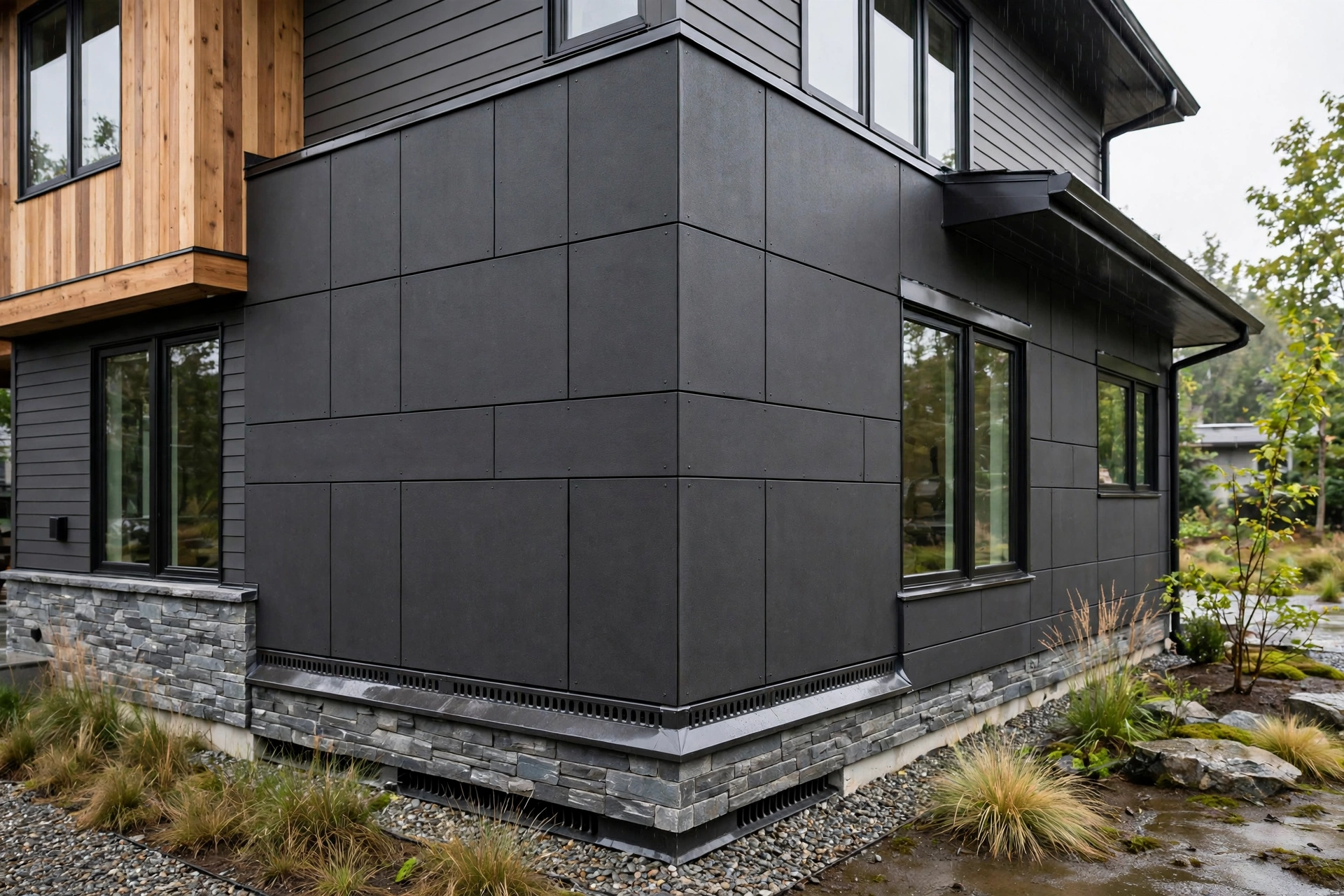
Moisture is the quiet enemy of every house. It creeps behind siding, soaks into sheathing, feeds mould, rots framing, and slowly undermines the structure long before a stain appears on an interior wall. Exterior cladding is your home’s first line of defence against that damage, and choosing the right material matters far more than choosing the prettiest one. The best exterior cladding materials for protecting residential buildings from moisture damage are fibre cement, brick veneer, vinyl, and properly detailed timber, each with different strengths, costs, and maintenance demands.
The short answer is that no single cladding material wins in every climate. Fibre cement and brick veneer offer the strongest long-term moisture protection for most homes, vinyl gives dependable protection at the lowest cost, and timber performs well only when it is detailed with a ventilated cavity and maintained regularly. What matters most is not just the board or panel itself, but the system behind it: the weather-resistive barrier, flashing, and drainage gap that let any water that gets in escape again.
Why Moisture Protection Starts Behind the Cladding, Not On It
Many homeowners assume cladding is a waterproof skin, but building science treats it differently. Every cladding leaks a little. Wind-driven rain finds its way through joints, around windows, and behind laps, no matter how carefully the material is installed. That is why modern wall assemblies are designed as a system: the cladding sheds most of the water, a weather-resistive barrier behind it stops what gets through, and a ventilated drainage gap lets moisture dry out instead of sitting against the structure.
This layered approach explains why two houses with the same cladding can age very differently. One has flashing that directs water out at every window and a clear gap behind the boards, so it stays dry for decades. The other has cladding nailed tight against the sheathing with no drainage path, so trapped moisture rots the framing from the inside. When you compare materials, always ask how each one works as part of that system, not just how it looks on the surface.
The Rainscreen Principle Every Homeowner Should Understand
A rainscreen is simply a gap, usually around 10 millimetres or more, between the back of the cladding and the weather-resistive barrier. Air moves through this gap, carrying moisture away and letting the wall dry after rain. Materials such as fibre cement, timber, and metal panels are normally installed as rainscreens, and they perform far better that way than when fixed directly against the wall. Brick veneer works on the same principle, with its cavity and weep holes doing the same job.
Signs Your Current Cladding Is Losing the Moisture Battle
Peeling paint, swollen boards, soft spots near the base of walls, musty smells inside, and damp patches that return after rain are all warning signs. Staining below window sills and bubbling finishes often point to failed flashing rather than failed cladding. If you see any of these, investigate the wall assembly before choosing a replacement material, because the new cladding will inherit the same problems if the drainage and flashing are not fixed first.
How Does Fibre Cement Cladding Resist Moisture Damage?
Fibre cement is made from cement, sand, and cellulose fibres, and it is one of the most moisture-resistant cladding materials available for residential buildings. It does not rot, it does not swell the way timber does, and insects ignore it. Boards and panels typically last 30 to 50 years with modest maintenance, which is why fibre cement has become a default choice for homes in wet and coastal climates.
Fibre cement does need paint or a factory-applied finish, and it must be installed with correct clearances above the ground and around openings so water cannot wick into cut edges. It is heavier than vinyl or timber, so installation is slower and labour costs are higher. Even so, for homeowners who want long service life with minimal moisture risk, it is usually the strongest all-round choice.
Brick Veneer and Stone: Heavy Protection That Lasts Generations
Brick veneer has protected homes from rain for centuries, and it remains one of the most durable moisture defences available. Brick itself absorbs some water, but the ventilated cavity behind it, combined with weep holes at the base, lets that moisture drain and dry. A well-built brick veneer wall can last the life of the house with almost no maintenance beyond occasional repointing of mortar joints.
Stone veneer offers similar durability with a different appearance, though natural stone is heavy and expensive, and manufactured stone must be detailed carefully to avoid trapping water behind it. The main drawbacks of masonry cladding are cost and weight: brick and stone need proper footings and skilled installation, so they are usually the most expensive options upfront. Over a long ownership period, however, their low maintenance often balances the initial outlay.
Vinyl and uPVC Cladding: Affordable Moisture Defence With Limits
Vinyl cladding is made from rigid plastic that does not absorb water at all, which makes it naturally resistant to rot and moisture damage. It is lightweight, inexpensive, quick to install, and needs little more than occasional washing. For budget-conscious homeowners, vinyl delivers reliable moisture protection for 20 to 30 years, and modern profiles look far better than the thin vinyl of decades past.
Vinyl does have limits. It can crack in extreme cold, fade or warp under intense heat, and it is not fire-resistant. It also hides problems: because it sheds water so effectively, a leak behind vinyl can go unnoticed until significant damage has occurred. Good installation with a proper weather-resistive barrier and flashing is essential, and homeowners should inspect behind the cladding if damp appears indoors.
Timber Cladding: Beautiful, But Only With Discipline
Timber cladding gives a warm, natural appearance that many homeowners love, and species such as cedar, larch, and thermally modified timber resist moisture far better than untreated softwood. When installed as a ventilated rainscreen with a breathable membrane behind it, timber can perform well for decades. The key is the detailing: end grain must be sealed, boards need gaps for movement and drainage, and the timber must be kept clear of soil and splashback.
The trade-off is maintenance. Timber needs re-oiling or re-staining every few years, and neglected boards will grey, crack, and eventually rot. In very wet or shaded locations, timber is a higher-risk choice than fibre cement or brick. Choose timber for its appearance and accept the upkeep, not because it is the easiest moisture defence.
Metal Cladding: Slim, Tough, and Surprisingly Water-Tight
Aluminium and steel cladding are increasingly popular on modern homes, and for good reason. Metal does not absorb water, does not rot, and resists insects and fire. Standing-seam and interlocking panel systems shed rain efficiently, and coated aluminium performs well even in salty coastal air. With a ventilated cavity behind it, metal cladding can last 30 to 40 years or more.
Metal does expand and contract with temperature, so fixings must allow movement, and denting is a risk in hail-prone areas or where children play ball games near walls. It is also more expensive than vinyl and can look out of place on a traditional house. For contemporary designs in exposed locations, though, it is a strong moisture-defence option.
Comparing Cladding Materials for Moisture Protection Side by Side
Use this comparison as a starting point, not a final decision. Local climate, exposure, budget, and the condition of your existing wall assembly all shift the ranking. A sheltered inland home can use timber happily for decades, while a wind-battered coastal house may need fibre cement or brick to stay dry.
Cladding Moisture Mistakes That Undo Even the Best Materials
- Fixing cladding tight against sheathing with no drainage gap, so trapped water cannot escape.
- Skipping or badly installing flashing around windows, doors, and roof junctions, where most leaks begin.
- Running cladding down to soil level, letting splashback and ground moisture wick upward.
- Sealing joints that were designed to drain, trapping water behind the boards.
- Painting fibre cement or timber with the wrong product, blocking the surface from drying.
- Mixing incompatible metals or fixings that corrode and stain the cladding.
Most moisture failures are detailing failures, not material failures. A modest material installed well will outlast a premium material installed badly. If you are hiring an installer, ask how they will detail the weather-resistive barrier, the drainage gap, and the flashing at every opening. Their answers matter more than the brand name on the boards.
When Cladding Replacement Needs a Professional, Not a Weekend DIYer
Replacing cladding is a structural job, not a cosmetic one. Removing old cladding exposes the weather-resistive barrier and framing, and any rot or insect damage found underneath needs proper repair before the new material goes on. In many areas, recladding requires a building permit and inspection, especially if the wall assembly or insulation is being changed. A qualified contractor or building surveyor should assess the existing wall first, and a structural engineer should be involved if framing damage is found.
DIY is realistic for small repairs, such as replacing a few damaged boards, but a full-house reclad is best left to experienced installers. Poorly installed cladding can void product warranties and create moisture problems worse than the ones you were trying to solve.
Cladding Moisture Protection FAQs
Which cladding material is most waterproof for a house?
No cladding is fully waterproof, because every system relies on drainage and drying as well as shedding water. Fibre cement, brick veneer, and metal come closest to complete moisture resistance, since they do not absorb water or rot. The most waterproof wall is a well-detailed rainscreen using one of these materials.
Does cladding stop damp in walls?
Good cladding reduces the amount of rain reaching the wall, but it does not cure damp on its own. Rising damp, condensation, and plumbing leaks have different causes and need different fixes. Cladding helps with rain penetration only, so diagnose the damp source before spending on new cladding.
Is fibre cement better than vinyl for wet climates?
Yes, in most wet climates fibre cement outperforms vinyl. It is more dimensionally stable, resists impact and fire better, and lasts longer. Vinyl is cheaper and lighter, so it suits budget projects, but fibre cement is the stronger long-term moisture defence.
How long does exterior cladding last before it needs replacing?
It depends on the material and maintenance. Vinyl typically lasts 20 to 30 years, timber 15 to 30 years with care, fibre cement and metal 30 to 50 years, and brick veneer can last the life of the building. Regular inspection and prompt repair of damaged sections extend every material’s life.
Can you install new cladding over old cladding?
Sometimes, but it is rarely the best choice. Covering old cladding hides rot, trapped moisture, and damaged flashing, and it adds weight and thickness that can cause problems at windows and eaves. Removing the old cladding lets you inspect and repair the wall properly, which is usually worth the extra work.
What is the cheapest cladding that still protects against moisture?
Vinyl is usually the cheapest moisture-resistant cladding, with low material and installation costs and minimal maintenance. Fibre cement costs more upfront but lasts longer, so it can be cheaper over the life of the house. Compare lifetime cost, not just the purchase price.
Final Thoughts: Choosing Cladding That Keeps Your Home Dry for Decades
The best exterior cladding for moisture protection is the one that suits your climate, your budget, and your willingness to maintain it, installed as a complete system with a weather-resistive barrier, flashing, and a drainage gap. Fibre cement and brick veneer lead on durability, vinyl leads on value, and timber and metal reward homeowners who choose them for the right reasons and detail them properly. Start by assessing your existing walls, fix the drainage and flashing first, and choose the material that will keep your home dry for decades, not just the one that looks best on the day it is installed.
 Peregrine